Image editing has made two old practices almost free. Decluttering used to mean a day of tidying before the photographer arrived; staging an empty property meant hiring furniture. Both can now be done to the photos after the fact, and both carry straight into a video made from those photos.
That is genuinely useful. It is also the point where a property video can stop being a fair picture of the property, and the consequences - a wasted viewing, an angry buyer, a portal complaint, a regulator - land on the agent, not on the software. Here is a practical way to draw the line.
Tidy up, furnish, nothing more
siriusly.ai can clear clutter or furnish an empty interior before a tour is filmed. Walls, floors, fittings and the view stay exactly as the listing shows them.
Try it freeThe Test: Would It Be There at the Viewing?
The simplest rule that holds up across markets: a buyer who books a viewing because of the video should find the property they saw. Not the same mess, not the same furniture - those are not part of the sale - but the same rooms, the same finishes, the same view and the same condition.
Everything that would leave with the seller, or that the seller could tidy away in an afternoon, is fair to change. Everything that is part of the property itself is not.
Fair to change: dishes, laundry, toys, cables, clutter on surfaces, personal photos and posters, pets, cars on the drive, the seller's furniture, furniture added to an empty room.
Never change: walls, floors, ceilings, windows, built-in kitchens and bathrooms, fixtures and fittings, the size or shape of a room, damage or wear, the view, neighbouring buildings, power lines, roads.
Decluttering
Clutter costs more in a video than in a photo. A still is scanned for a second; a camera move holds on the pile of mail for several. Removing it is the single most effective edit you can make, and it is the least controversial, because it shows the room as it would look at a well-prepared viewing.
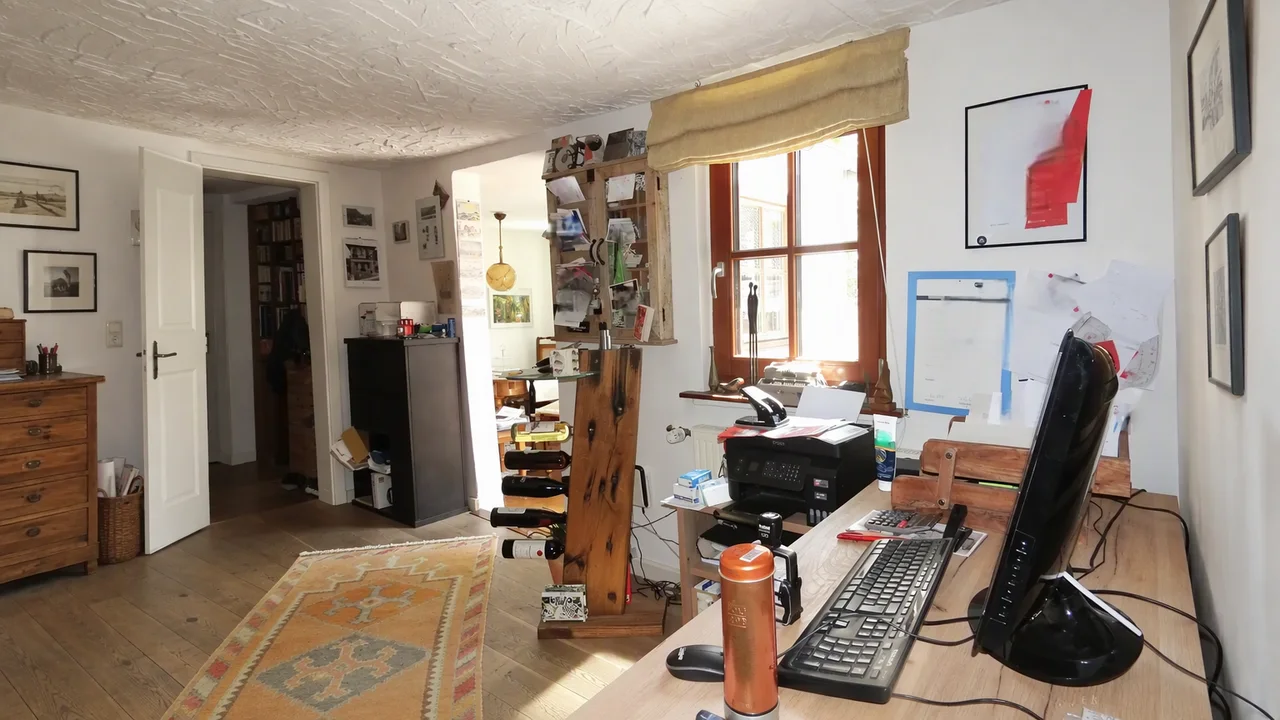
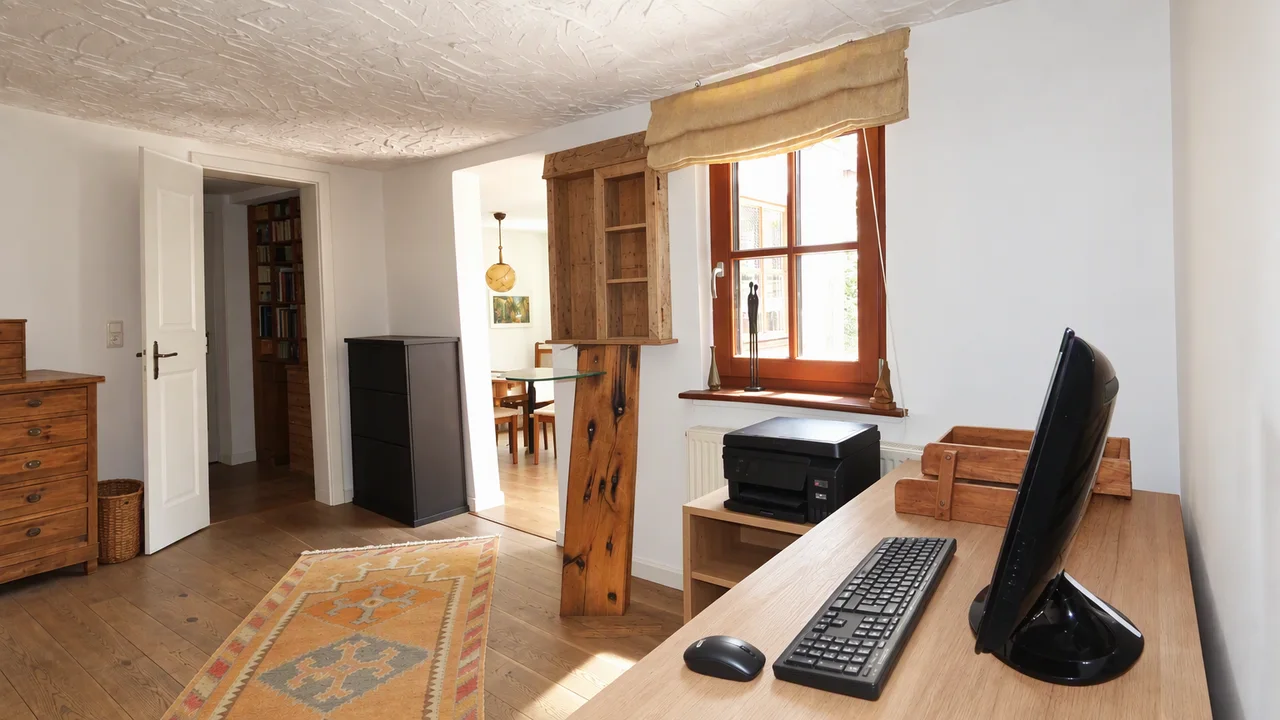
What to clear: dishes and food, clothes and laundry, personal photos and posters, children's drawings, bins, pets and their bowls, and anything with a name or address on it. That last one is a privacy matter as much as a marketing one - a seller's family photos and post have no business in a public video.
What to leave: anything fixed. A tidy-up that also quietly removes a radiator, a stain on the ceiling or a crack in the tiles has crossed the line, even if nobody asked it to. Check the after against the before, room by room.
Virtual Staging
Empty rooms are hard to read. Without furniture a buyer cannot judge scale, and a bare room looks smaller and colder than it is. Staging it virtually - a sofa, a rug, a dining table - helps the viewer picture living there, which is exactly what physical staging has always done.
The rules for doing it fairly:
- Furniture only. Add movable things. Do not repaint, refloor, add a fireplace or swap the kitchen.
- To scale. A double bed that would not actually fit through the door, or a dining table for twelve in a room that seats six, misrepresents the size of the room.
- Plausible for the space. Furnish a box room as a study or a nursery, not as a master bedroom.
- Say so. Mark staged images and staged video as staged. Many portals and MLSs require it, and a buyer who discovers it unannounced at the viewing trusts nothing else in the listing.
The Edits That Get Listings Reported
Hiding the neighbours. Removing the block next door, the pylon or the railway from the view.
Upgrading the finishes. Turning laminate into oak, a tired kitchen into a new one, or a 1970s bathroom into a spa.
Hiding condition. Erasing damp patches, cracks, worn carpet or water damage.
Changing the space. Widening rooms, raising ceilings or adding windows through lens tricks or generative fill.
Fix for all of them: if the buyer would notice the difference at the viewing, do not make the edit.
What the Rules Say
The detail varies by country and by portal, and none of this is legal advice, but the direction is consistent everywhere:
- Advertising rules for estate agents generally require a true picture of the property. In the US, the NAR Code of Ethics asks agents to present a true picture in their advertising, and many MLSs have specific rules on disclosing virtually staged images.
- Consumer-protection law in the UK and the EU treats a misleading image the same way as a misleading statement. Hiding a defect in a photo is no safer than leaving it out of the description.
- AI transparency rules are arriving on top. The EU AI Act's transparency obligations, which apply from August 2026, require realistic AI-generated or manipulated images and video to be disclosed as such. A tour generated from listing photos should carry an "AI-generated" label where those rules apply.
The practical upshot: disclose staging and AI generation clearly, keep the unedited photos in the listing alongside any edited ones, and never edit the property itself.
A Workable Policy
Staging and tidy-up rules for an agency
Always OK: removing clutter, personal items and pets; a seller's furniture in place or removed.
OK with a label: furniture added to empty rooms; AI-generated video made from the listing photos.
Never: any change to the building, its fixtures, its condition, its size or its surroundings.
Always: unedited photos kept in the listing gallery; a quick before-and-after check of every edited room.
FAQs
Do I need the seller's permission to tidy or stage the photos?
It is good practice to agree it with them, especially if their furniture is being replaced on screen. Most sellers are glad of it; some are attached to their furniture.
Can I replace a grey sky?
Sky replacement is common in exterior photography and generally tolerated when it is plausible for the location and season. It becomes misleading when it changes what the buyer would actually see - turning a north-facing garden into a sun trap, for example.
Should I show both the staged and empty versions?
For photos, keeping both in the gallery is the safest approach and is required by some MLSs. For video, label the staged version clearly and keep the unstaged photos on the listing.
Does decluttering need a label?
Generally no, any more than tidying before a photo shoot does - provided nothing fixed has been changed. AI labelling rules may still apply to the video itself where it is AI-generated.