Listing photography has been optimised for years around one job: the thumbnail and the first five frames of a portal gallery. A property video asks the photos for something different. Each photo becomes the starting point of a short camera move through the room, so what matters is less whether a frame is beautiful on its own and more whether it gives the camera somewhere to go.
The good news is that the photos that work for video are almost always the photos that work best for the gallery too. Nothing here needs a second shoot or a video crew - just a slightly different shot list.
Paste the listing, get the tour
siriusly.ai reads the photos and facts straight off a public listing page and turns them into a tour, a narrated walkthrough or an agent-on-camera video.
Try it freeWhat a Video Needs From a Photo
When a video model animates a listing photo, it is asked to move the camera forward through the space: past the sofa, toward the window, through the open door. To do that convincingly it needs three things the photo has to supply:
- Depth. Something near, something in the middle and something far. When those layers slide past each other at different speeds, the room reads as a real space rather than a flat picture being zoomed.
- A direction. A window, a doorway, a corridor or a kitchen island - an obvious place the camera could be walking toward.
- Room to move. Floor in the foreground. A photo taken with the lens pressed against the furniture leaves the camera nowhere to travel without inventing what is behind it.
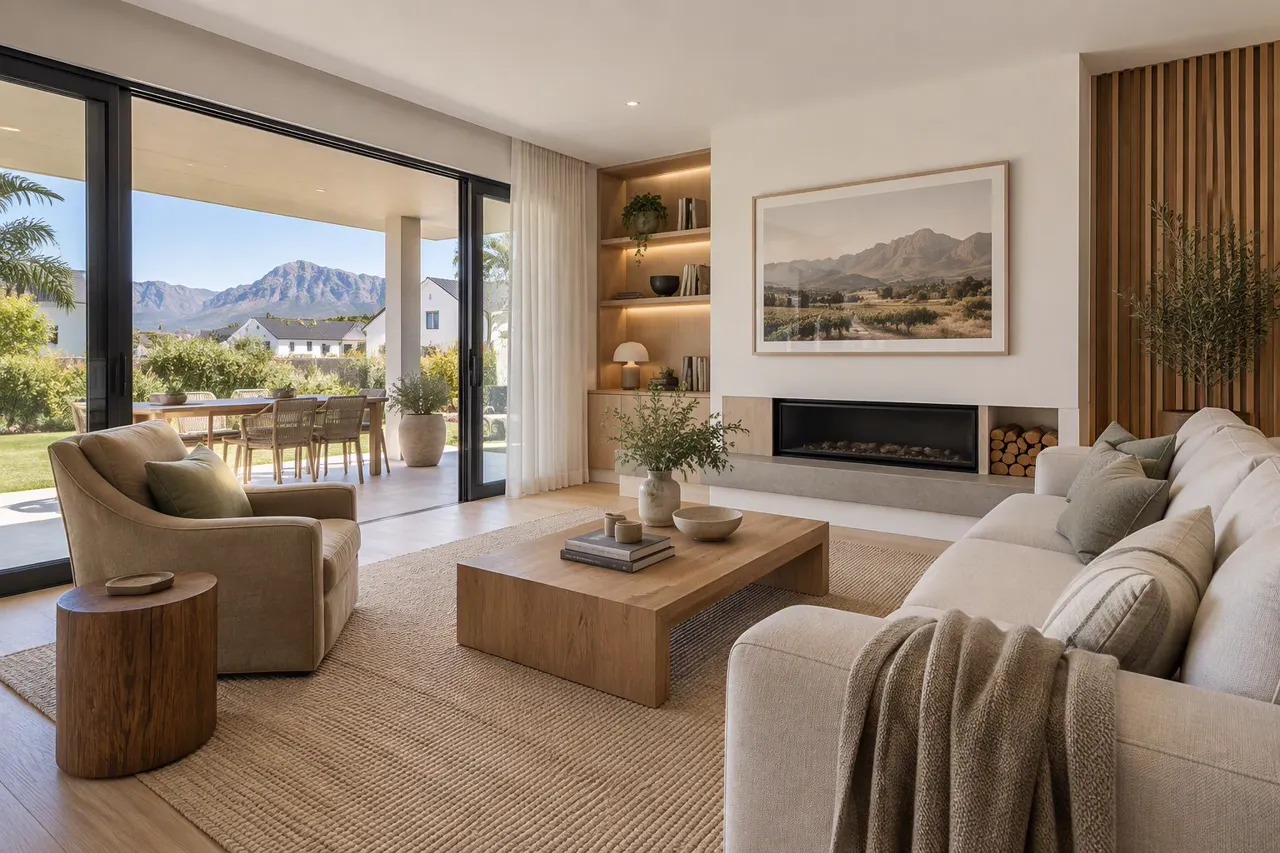
That one photo above can become a five-second shot that drifts in past the armchair toward the garden doors, and it will look like it was filmed. A tight frame of the same sofa can only become a slow push into upholstery.
The Five Shots That Turn Into Good Video
1. The corner wide
Stand in a corner, camera at chest height, level, and frame as much of the room as the lens allows without bending the walls. This is the single most useful photo of any room, for the gallery and for the video. Every main space - living room, kitchen, main bedroom - should have one.
2. Through the doorway
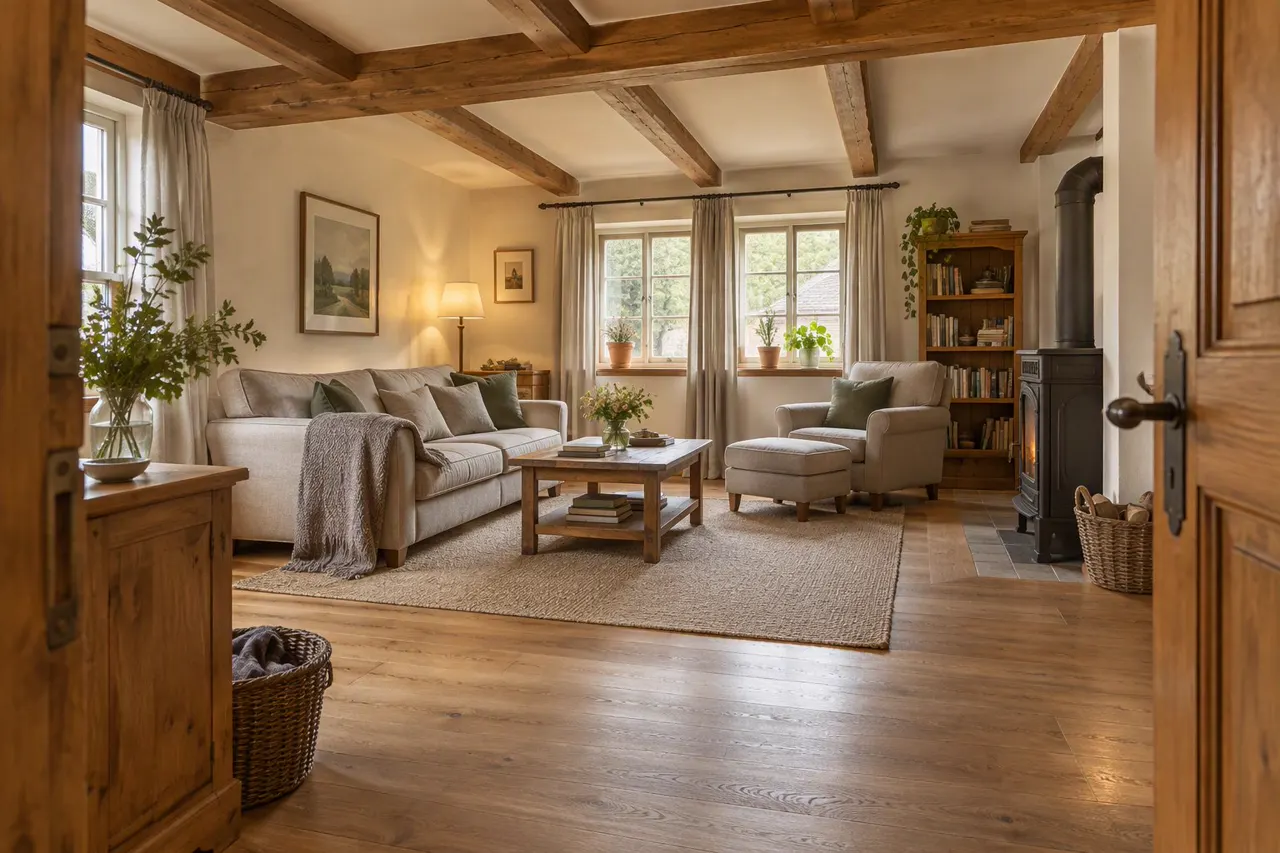
A photo taken from one room into the next, with the door frame in the foreground, is the closest a still photo gets to a camera move. The frame edge gives the strongest possible depth cue, and the open door gives the video a natural transition into the next space.
3. The leading line
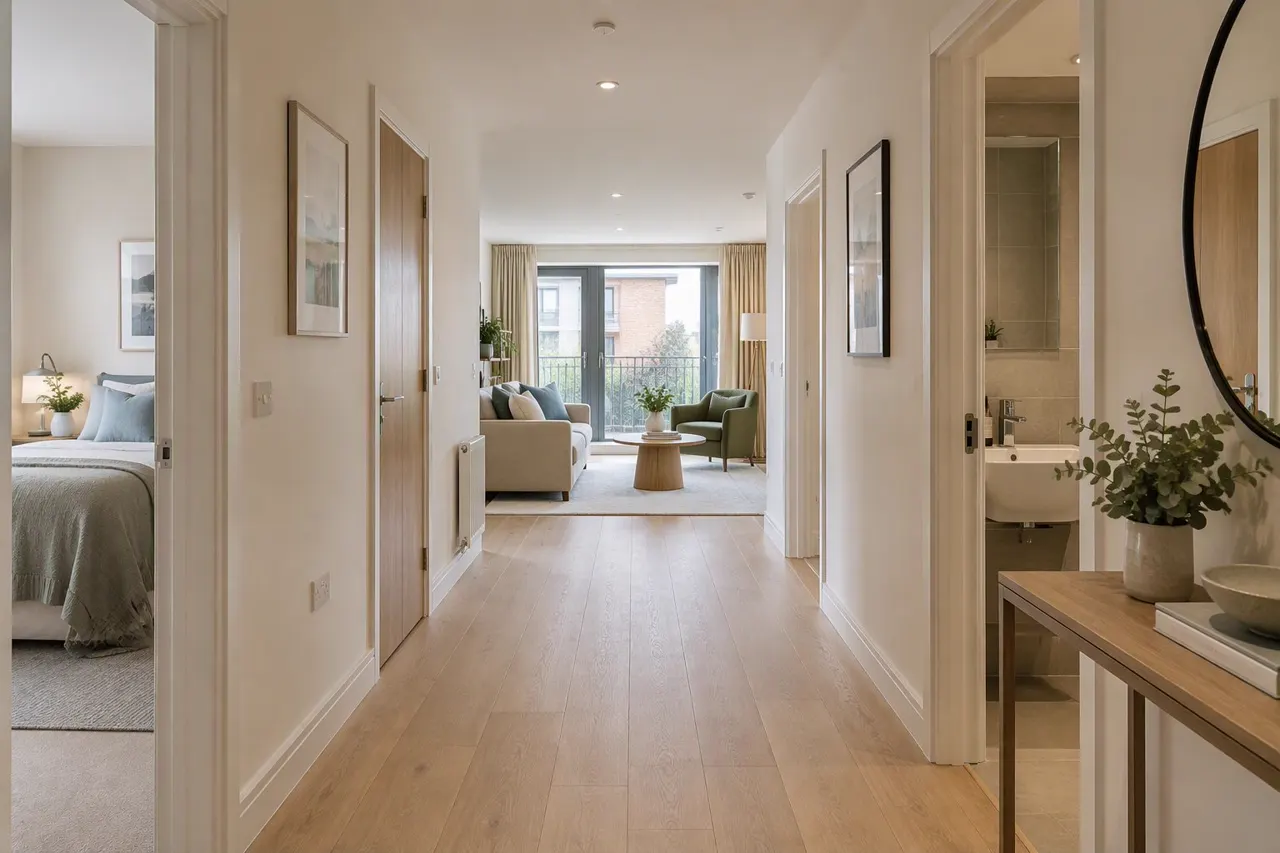
Hallways, staircases, a long kitchen run, a garden path. Lines that run away from the camera tell the viewer where to look and tell the video where to go. They also make small spaces read as connected, which is half of what a buyer is trying to work out from a tour.
4. A second angle of the rooms that sell the place
Galleries often have one photo per room. A video spends a few seconds on each shot, and a tour of the main rooms told from one angle each runs out of material fast. Shoot the living room and kitchen from two opposite corners. It costs two extra frames and doubles the useful footage of the spaces buyers care about most.
5. One or two details
A stone worktop, a brass tap, the fireplace. In a video, a close-up between two wide shots changes the rhythm and gives the tour the feel of a professional shoot. One or two per listing is plenty; a gallery of nothing but details tells the viewer nothing about the layout.
Shots That Quietly Ruin a Tour
Tight, flat frames. A bed shot straight-on from its foot, a sofa filling the frame. No depth, nowhere to move, and the video can only zoom.
Step back to the corner. Same room, shot from where the walls meet, with floor in the foreground.
Tilted verticals. Pointing the camera up or down makes walls lean. In a still it looks slightly off; in a moving shot the leaning walls appear to wobble.
Keep the camera level at chest height and let the ceiling or floor crop instead.
Extreme wide-angle distortion. Stretched corners and bowed furniture get worse when the camera moves, because the distortion shifts as the frame changes.
Back off the widest setting a little. A slightly narrower, undistorted frame animates far better.
Heavy HDR and blown windows. Haloed edges and white windows give the video nothing to resolve, and the view is often what sells the room.
Shoot with lights on and balance the window, so the view outside is visible in the frame.
Light, Doors and Clutter
Three habits on the day make more difference than any equipment:
- Every light on, blinds open. Even in daylight. Mixed dark corners become murky patches once the camera moves through them.
- Interior doors open. Every open door is a possible transition and a depth cue. A closed door is a wall.
- Surfaces cleared. Clutter costs more in video than in a still. The eye forgives a cluttered photo it scans for a second; a camera move holds on the clutter for several. If the photos are already taken, a tidy-up pass can clear dishes, clothes and personal photos before the video is made - the rules for doing that honestly are in the piece on staging and decluttering.
Exteriors and Surroundings
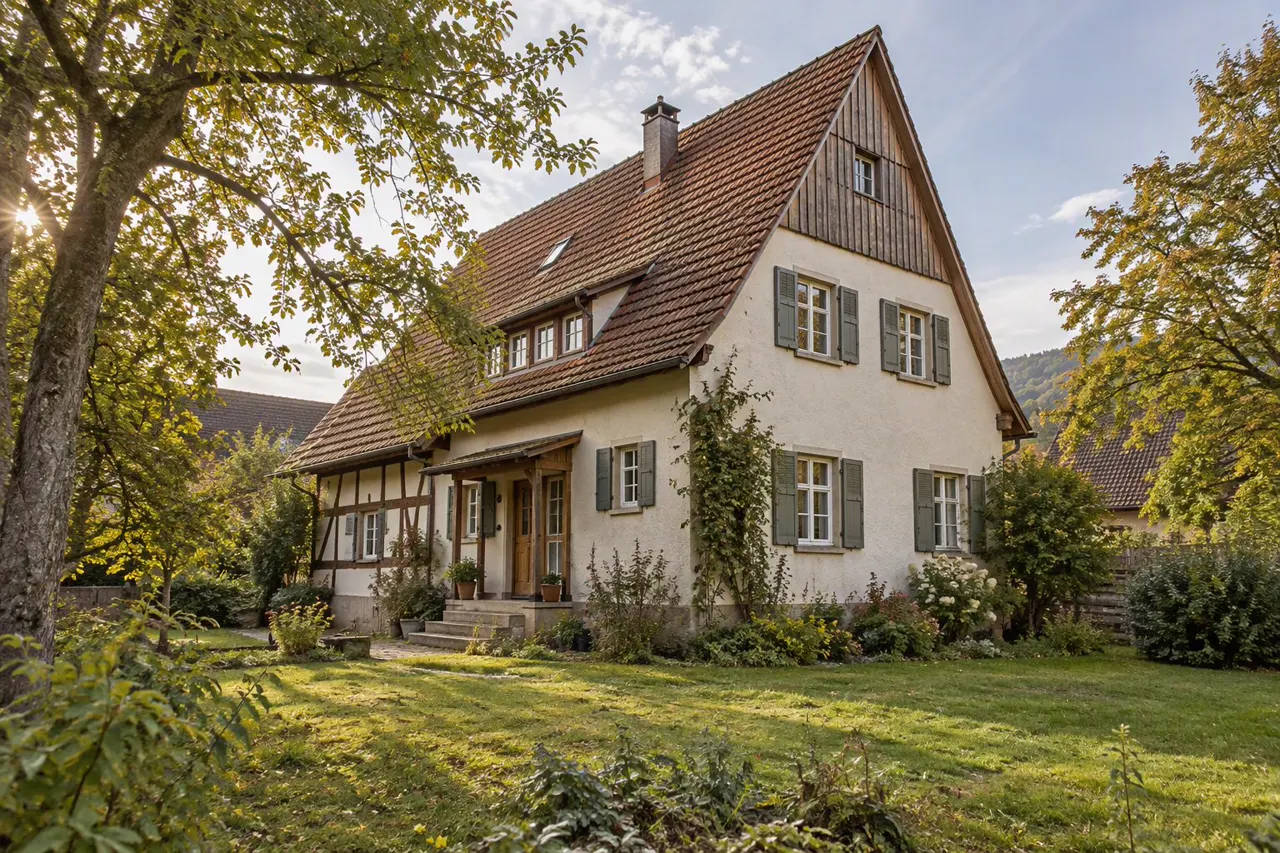
The front of the building is usually the first and last shot of a tour, so it is worth getting one strong, level, full-facade photo in good light. Beyond that, photos of the street, the view, the beach or the village are valuable precisely because they are not of the property: they open or close the video and answer the question every buyer has about location. Shoot them, and label them clearly in the gallery so nobody mistakes the beach for the garden.
A Shot List You Can Hand Over
Video-ready listing shoot
Exterior: one level full-facade hero, one approach (path, entrance or driveway), one of the street or view.
Main rooms (living, kitchen, main bedroom): a corner wide from two opposite corners each.
Other rooms: one corner wide each, plus one through-the-doorway shot connecting two spaces.
Circulation: hallway or stairs, shot down their length.
Details: one or two close-ups of whatever is genuinely special.
Everywhere: lights on, doors open, surfaces clear, camera level at chest height, landscape orientation.
A shoot like this typically lands at 20 to 30 photos for a family home - more than enough for a minute-long tour. Below about six distinct room photos there simply is not enough material to show a place without repeating it.
FAQs
Should I shoot vertical photos for a vertical video?
No. Shoot landscape, as you would for the portal. A vertical tour keeps roughly the middle of each frame, so the habit worth changing is composition: keep the thing that matters - the window, the island, the fireplace - nearer the centre rather than at the edge of the frame.
Are phone photos good enough?
Often, yes, if they are level, well lit and wide without heavy distortion. Composition and light matter far more than the camera. The failure with phone photos is usually the ultra-wide lens at its widest, not the phone itself.
Do I need drone photos?
Only where the plot, the view or the setting is the selling point. One aerial makes a strong opening shot for a country house or a waterfront apartment. For a city flat it adds little.
How many photos does a tour need?
At least six distinct spaces to avoid repeating shots, and roughly one photo per three to five seconds of video beyond that. A second angle of the main rooms is the cheapest way to make a longer tour possible.
What about twilight shots?
They make excellent closing shots for a tour, especially for homes with good exterior lighting. Keep one daylight exterior too, so the video does not open in the dark.